Sewing Machines
Machine types, stitch formation, stitch classes, needles and attachments used on the sewing floor.
Roller Presser Foot — For Leather and Hard-to-Feed Fabric
The roller presser foot uses a rolling wheel to feed difficult materials smoothly.
Piping Foot — Making and Attaching Piping
The piping foot holds the cord in a groove so you can sew perfect piping every time.
Hemming Foot — Rolled Hem in One Step
The hemming foot rolls and stitches a narrow hem in one pass without pre-ironing.
Compensating Presser Foot — Sewing Over Thick Seams
The compensating foot keeps the needle stable when sewing over or beside thick seams.
Binder Foot — Attaching Bias Tape Neatly
The binder foot folds and attaches bias tape or binding in one pass with consistent width.
 Sewing Machines
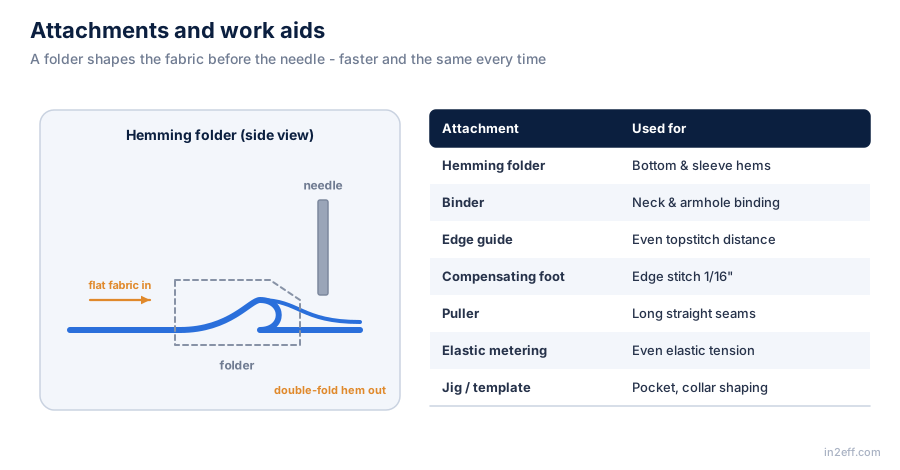
Attachments, folders and work aids that raise output
How folders, binders, guides, pullers and jigs cut SAM and defects, how to choose one for an operation, and how IE can track the saving.
 Sewing Machines
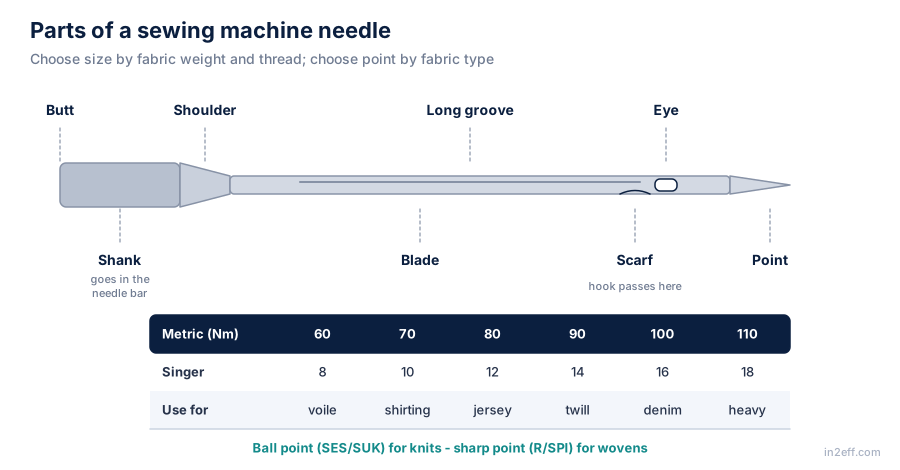
Sewing needles: parts, sizes, points and how to choose
Needle anatomy, metric and Singer sizes, ball point vs sharp point, matching needle to thread and fabric, and a needle-change routine that protects quality.
 Sewing Machines
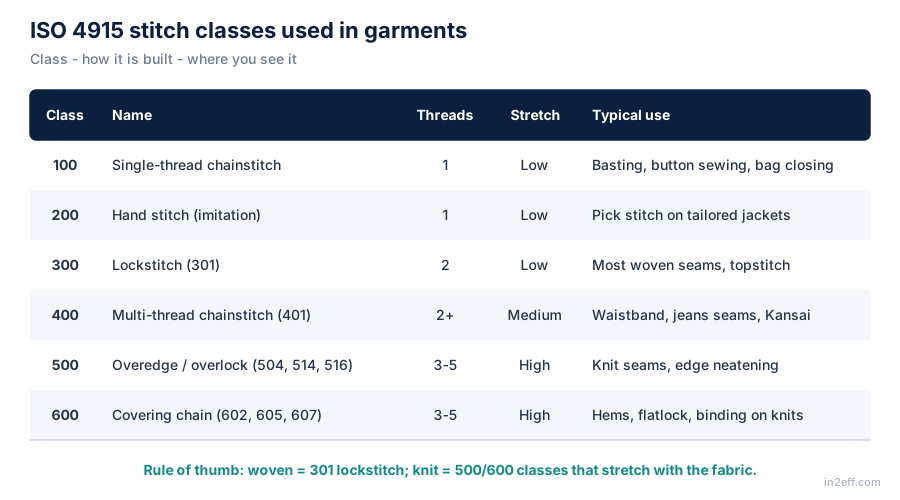
Stitch classes (ISO 4915) and choosing the right seam
The six stitch classes from 100 to 600, what each is good at, and a simple guide to choosing stitch and seam for strength, stretch and look.
 Sewing Machines
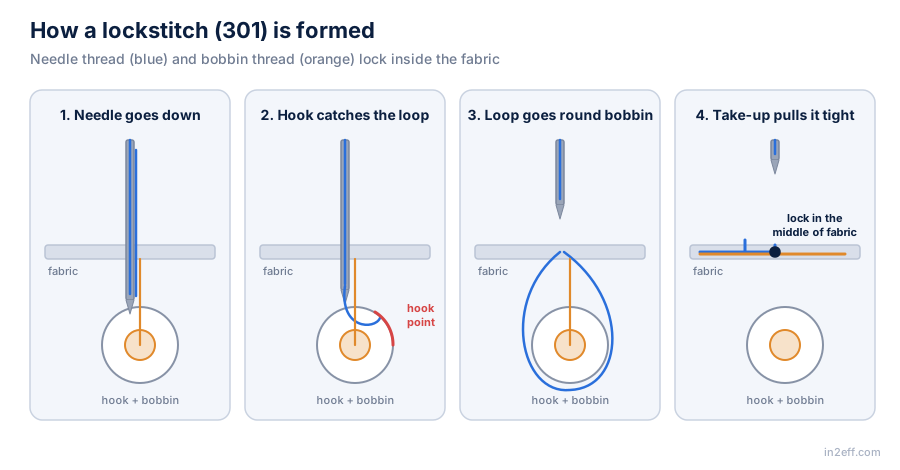
How a lockstitch is formed: needle, hook, bobbin and take-up
The four steps of stitch 301, the parts that make it, and why timing, needle and hook gap decide whether you get a good stitch or a skipped one.