Most small breakdowns on a sewing floor start with lint, missing oil, a bent needle or a wrong threading path - things the operator sees first. Autonomous maintenance (Jishu Hozen in TPM) gives the operator ownership of these basics.
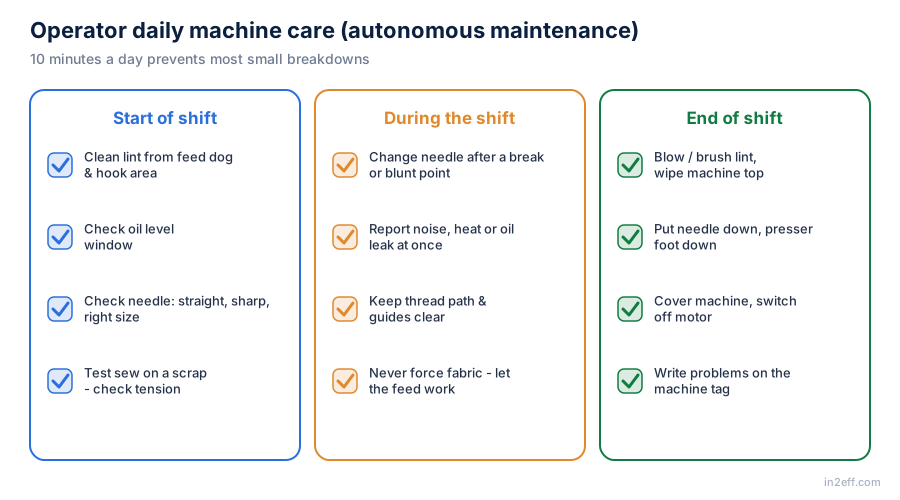
The daily checklist
Start of shift (3-4 minutes)
- Brush lint from the feed dog, hook and under the needle plate.
- Look at the oil window - level between the marks.
- Check the needle: straight, sharp, correct size and point.
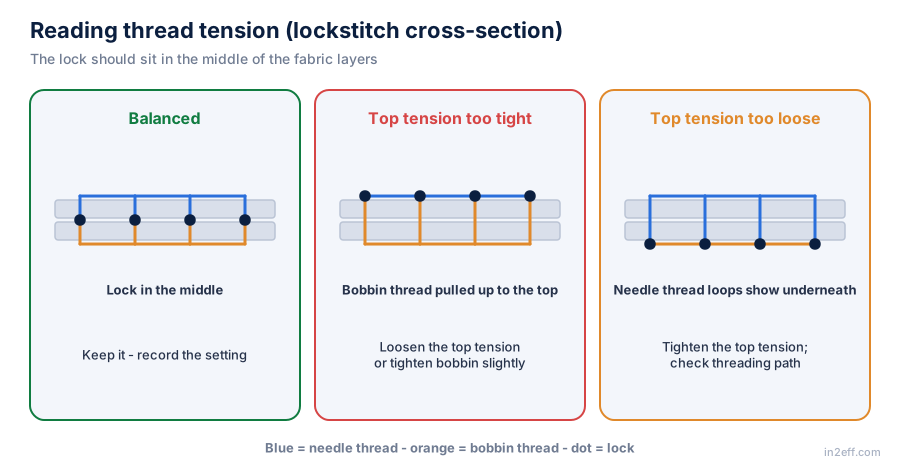
- Sew a test piece on scrap fabric; check stitch, tension and SPI.
During the shift
- Change the needle when it is blunt or after any knock.
- Report unusual noise, heat, smell or oil leak immediately.
- Keep thread stand, guides and tension discs clear.
- Let the feed dog move the fabric - pulling causes needle breaks and uneven stitches.
End of shift (3-4 minutes)
- Blow or brush lint, wipe the table and machine head.
- Needle and presser foot down; switch off the motor.
- Cover the machine. Write any problem on the machine tag for the mechanic.
How to introduce it (TPM steps, simplified)
- Initial clean - mechanics and operators clean machines together and tag every problem found (red tag = mechanic, white tag = operator can fix).
- Fix sources of dirt - lint covers, oil drip trays, better thread stands.
- Set standards - a one-page picture checklist at each machine, in Bangla.
- Train and check - supervisors check 5 machines per line per day and score them.
- Sustain - include machine care in operator skill matrix and line 5S audits.
Tip: Make the checklist pictures, not words: a photo of a clean hook area is clearer than a paragraph.
What to measure
| Measure | Why |
|---|---|
| Small breakdowns per line per week | Should fall as daily care improves |
| Oil-related stains (DHU code) | Direct link to cleaning and leaks |
| Checklist score by line | Shows which supervisors follow up |
Key points
- Ten minutes of daily care prevents most small stops.
- Operators clean, inspect and report; mechanics repair.
- Use picture checklists and daily audits to make it stick.