A maintenance department without records repeats the same repairs forever. Two simple tools fix that: a history card for every machine and a min/max list for spare parts.
The machine inventory
Every machine gets a unique number painted or stickered on the head (for example L05-12 = line 5, position 12, or an asset number). The inventory lists:
- Machine number, type, brand and model, serial number
- Motor type (clutch or servo), attachments fitted
- Purchase date / age, current location (line or store)
- Status: running, spare, under repair, scrap
Update the inventory after every line layout change. It is also the base for machine requirement planning when a new style comes.
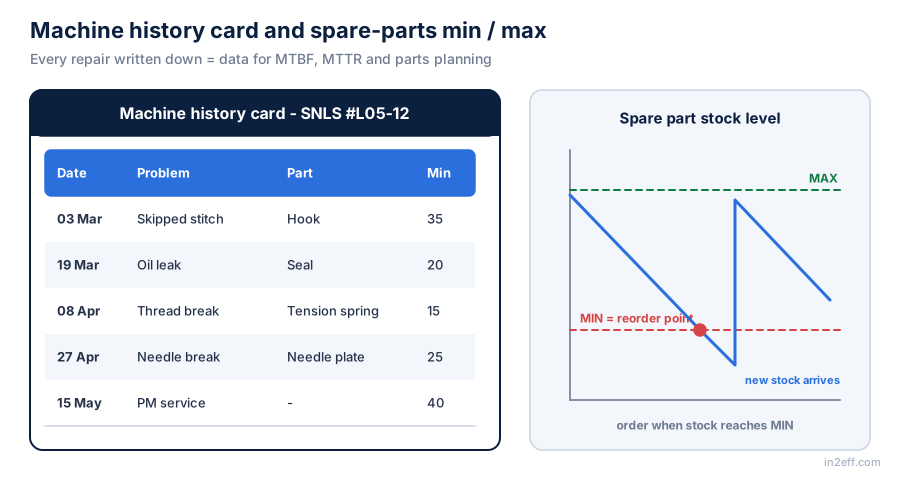
The machine history card
For each repair or service record:
| Field | Example |
|---|---|
| Date and time down / up | 08 Apr 10:15 - 10:30 |
| Problem reported | Thread break |
| Cause found | Burr on needle plate |
| Part changed | Needle plate |
| Minutes lost | 15 |
| Mechanic | Rahim |
After a few months you can sort by machine and by part: the 10% of machines with the most stops are candidates for overhaul or replacement.
Spare parts: what to stock
- Fast-moving consumables - needles, bobbins, bobbin cases, hooks, feed dogs, needle plates, presser feet, knives, belts, springs.
- Critical spares - parts that stop a machine for days if missing (motor control boards, special machine parts).
- Slow-moving - buy on demand, but know the lead time.
Setting min / max
Formula: Reorder level (min) = average daily use × supplier lead time (days) + safety stock
Formula: Max level = reorder level + reorder quantity − (minimum daily use × minimum lead time)
Example: hooks for SNLS - use 2 per day, lead time 10 days, safety stock 6 → reorder at 26. Order 40 at a time.
Tip: Keep worn parts until the replacement is issued (old-for-new). It controls theft and shows the real wear rate.
Key points
- Number every machine and record every repair.
- History cards show which machines and parts cause the most downtime.
- Min/max on fast-moving parts keeps MTTR low without tying up cash.