The merchandiser is the factory's voice to the buyer and the buyer's voice inside the factory. When an order ships on time at the agreed quality and price, a merchandiser has usually solved a hundred small problems along the way.
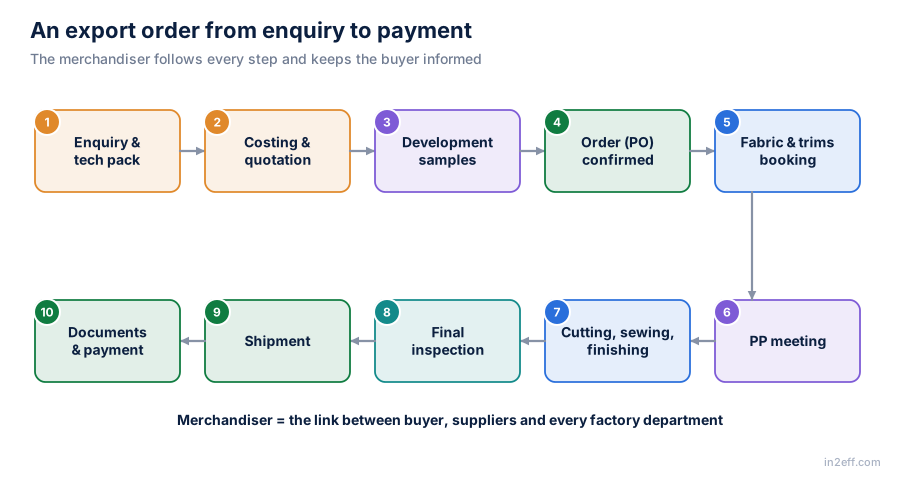
The ten steps of an export order
- Enquiry and tech pack - the buyer sends sketches, measurements, fabric and trim details and target quantity/price.
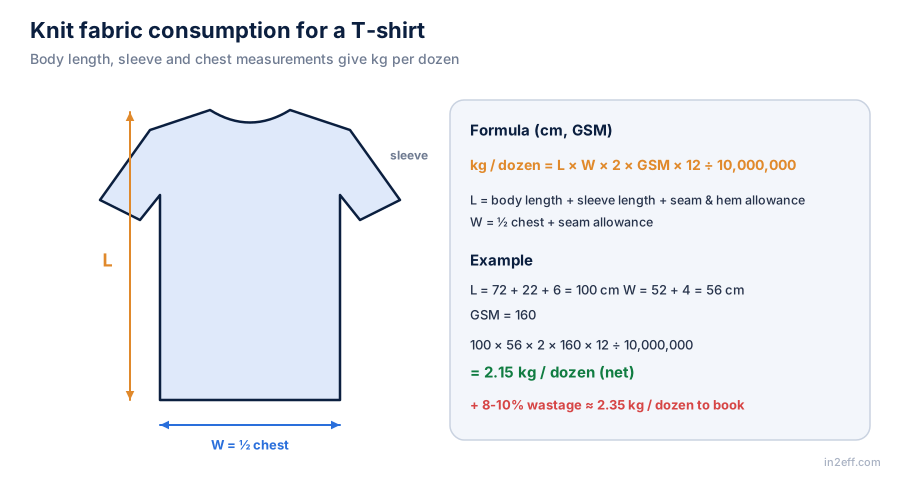
- Costing and quotation - fabric and trim consumption, CM from SAM, washing/printing, commercial costs and margin.
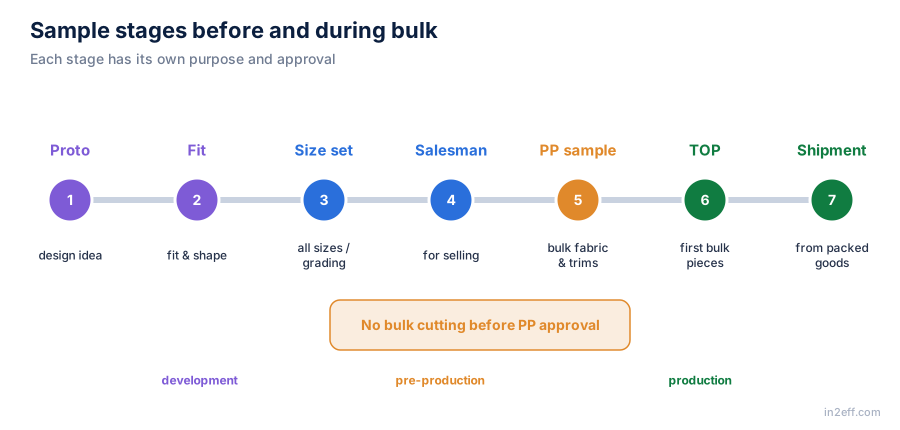
- Development samples - proto and fit samples until the style is approved.
- Order confirmed (PO) - quantity by colour and size, price, delivery date, payment terms.
- Fabric and trims booking - purchase orders to mills and suppliers; L/C or payment opened.
- PP meeting - all departments review the approved PP sample, risks and special instructions before bulk.
- Cutting, sewing, finishing - the merchandiser follows daily progress against the plan.
- Final inspection - buyer or third-party AQL inspection.
- Shipment - booking, container loading, export documents.
- Documents and payment - commercial invoice, packing list, bill of lading, certificate of origin go to the bank; payment is received.
What a merchandiser needs to know
| Area | Why |
|---|---|
| Fabrics and trims | To book the right material and judge quality |
| Costing | To quote profitably and check every cost |
| Production basics (SAM, capacity) | To promise realistic delivery dates |
| Quality standards (AQL, measurements) | To avoid shipment failures |
| Commercial (L/C, incoterms, documents) | To get paid without discrepancy |
| Communication | Clear, written, on time - with buyer and every department |
Habits of a good merchandiser
- Keep one order file (paper or digital) with every approval, comment and change - in writing.
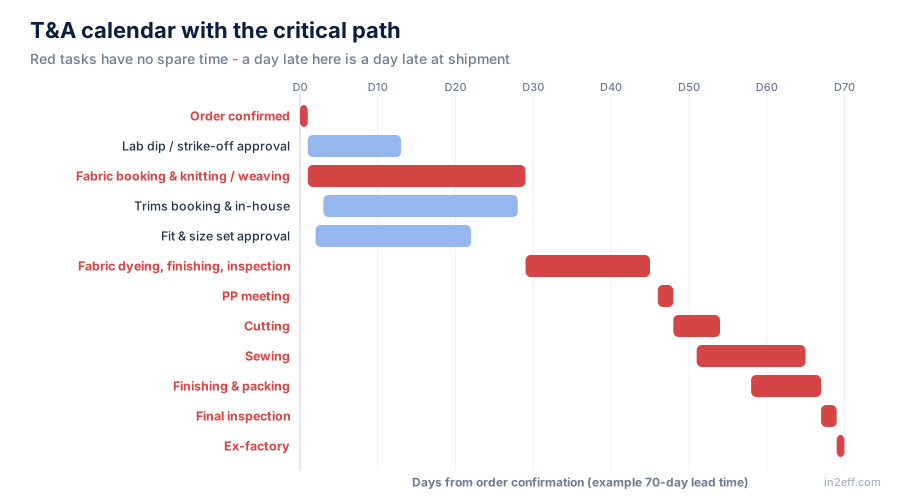
- Update the T&A calendar every day and warn early when a date is at risk.
- Never let bulk start without PP approval and all materials in house.
- Visit the floor daily: cutting, sewing and finishing see problems first.
- Close every order with a reconciliation of fabric, trims and quantities.
Tip: Write meeting outcomes in an email the same day - "as discussed" protects the factory when someone remembers differently later.
Key points
- The merchandiser links buyer, suppliers and every department.
- Ten steps from enquiry to payment - each has a document and an approval.
- Written records, a live T&A and floor visits prevent most delays.